Commentary on Movies and TV by Brian Holcomb

Friday, February 27, 2009

"Pinteresque"

The great English playwright and Nobel prize winner Harold Pinter passed away on Christmas Eve at the age of 78. Very few artists can claim to have had their very name become an adjective found in most standard dictionaries but Pinter is on that short list. Here is what the Oxford English Dictionary defines as "Pinteresque":

"Of or relating to the plays of Harold Pinter; marked especially by halting dialogue, uncertainty of identity, and air of menace."

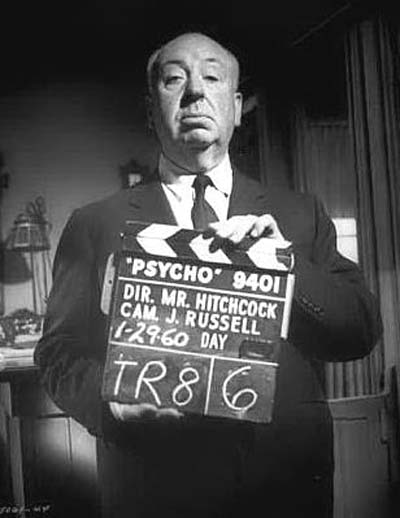
Well, what does that tell us? It's basically like saying that "Hitchcockian" refers to the suspense and tension in the films directed by Alfred Hitchcock. If you haven't seen it yourself it doesn't mean much at all. Hitchcock's brand of black humored, sophisticated suspense is quite different from what might be expected.

Pinter was for many years a mystery to me. Absurdly, I first tried to read The Birthday Party when I was 12 years old. I wasn't THAT precocious-at least not about literature. Movies were my thing and at that time I making my way through the films of William Friedkin. Friedkin directed a film version of the play scripted by Pinter himself and starring Robert Shaw in 1968. It was a film I could not find at the time. So, when I found the play at the local library I dove into it to imagine what kind of tense and shocking thriller the director of The French Connection and The Exorcist could've made of it. What I discovered instead was a strange text full of specific words in strange combinations about some guy named Stanley who may or may not be on the run from some people who may or may not intend to harm him. Maybe. Nothing was certain the least of all the plot which at 12 years old is basically what seems to be the entire purpose of narrative fiction. I basically tossed the play aside as pointless and inexplicable. The only part I liked was a three page scene in which two strange men, Goldberg and McCann interrogate Stanley using a rythmic dialogue that reminded me of the famous "Who's on First?" sketch by Abbott & Costello. But again, it was words, words, in strange alternations with these...weird...PAUSES...

Years later I gave Pinter a second chance with something a little easier The Dumb Waiter which is like Quentin Tarantino's entire career in one act. I had just read Waiting for Godot and suddenly the whole thing clicked. I "got" what Pinter was all about, at least early Pinter which is what I prefer. He seemed to be combining in a wholly original, almost intuitive way the kind of absurdist theater of Becket and Ionesco with theoretically more realistic settings and a slangy language that sounded like snatches of overheard conversations edited to a cadence. The Dumb Waiter is like a gangster version of Godot with the two hitmen waiting forever for their orders to kill-neither understands their place in the universe any more than Vladimir or Estragon in Becket's play. But what Pinter adds to the mix is this veil of language- a veil so thick that no one can break through the games of wordplay, of question and non-answer, of pause before response.

This is the brilliance of Pinter's conversations-perfectly sculpted to dance around meaning, to create ambiguity as to what the REAL meaning might be. This goes beyond subtext, it's a kind of SUBconcious text. In Pinter's final screenplay, his reworking of Anthony Schaffer's much more straightforward thriller Sleuth, we get gems like the following quid pro quo between Michael Caine and his wife's new lover a struggling actor played by Jude Law:

Andrew: Why have I never heard of you?
Milo: You will before long.
Andrew: Really?
Milo: In Spades.
Andrew: That sounds threatening.
Milo: Does it?
Andrew: Doesn’t it?

So much of what makes Pinter unique can be found in that exchange of words-all in concealment of meaning. The two men are merely testing each other and it starts with words.The "air of menace" the OED refers to is there as well "in spades." But this is something that one needs to see performed in order to understand. Pinter was a stickler for his "...", "PAUSES", and "SILENCES" each with it's own meaning. When I finally saw The Birthday Party I saw how actors like Shaw and Patrick Magee could bring this menace between the lines alive. Watch this clipto see what I mean:


Pinter's influence is incalculable. David Mamet and Patrick Marber are clearly working in his shadow in the theater while Tarantino and Paul Thomas Anderson exhibit his use of quiet tension on the big screen. Along with Kafka, he has meant a great deal to me in my own writing and I continue to return to his work like a fountain of inspiration.

For more info check out my review of Kenneth Branagh's Sleuth HERE

Saturday, February 21, 2009

Exorcist II: The Heretic Film Review


by Brian Holcomb

There's something to be said for directorial ambition. It's common to lay blame whenever a filmmaker overreaches instead of congratulating them for not doing the mundane, safe, and obvious. Some filmmakers make a habit of overreaching and John Boorman is near the top of a list that would include at the very least mad geniuses like Orson Welles, Francis Ford Coppola, and Terry Gilliam. Boorman is a man with lots of mad ideas swirling uncontrollably in his magpie mind. Sometimes these ideas come together in coherent ways and we get films like Point Blank, Deliverance, Excalibur, Hope and Glory and The General. When they come together like a mixed stew we get films like Zardoz, Leo the Lost and, of course, Exorcist II: The Heretic.

I have to admit that I don't think there is a great divide between the two forms of madness.

This film is basically reviled by everyone. It's greeted with camp derision the moment it's brought up in conversation. Well, that's because it's completely and utterly batshit insane. Taken on its OWN terms, without expectation, the film is still pretty Godawful. However, it remains essential viewing for it's sheer ambition and reach which is amazing. No film could achieve it's goals and certainly not a sequel to a box office hit with an expectation set of its own.

Eschewing the procedural format of it's predecessor, Boorman places the follow-up square within a world of magic and fantasy-a world not so different from those depicted in Boorman's earlier Zardoz or later Excalibur. This is the premise on which the film starts and it is already a problem. The classical horror film (which Friedkin's The Exorcist still is despite its extremes) asks the audience to suspend their disbelief by having the supernatural invade what appears to be a fairly natural, acceptably normal world. The original film used realistic location photography, naturalistic and motivated lighting, and subdued performances in order to create an everyday mundanity. Defiantly, The Heretic begins on the wings of a demon and is set in a New York City as imagined by a blind and insane Chinese production designer.

A research facility made up of glass, mad scientist helmets ("The SYNCHRONIZER") which can link 2 separate brain waves, a constantly sweating Richard Burton acting up a storm, really cheap looking FX, James Earl Jones as Kokumo, Ned Beatty flying a helicopter, and dialogue that sounds like something was lost in translation from the original Swahili basically do everything possible to create disbelief rather than suspend it.

But the thing is, the film has so many more ideas than Friedkin's film it is a shame Boorman couldn't pull it off. He seems trapped between the literal and the metaphorical, between the realism of the original film which he has to respect on the one hand and the personal desire to make a film that exists on a whole different plane altogether. It seems that he and "creative associate" Rospo Pallenberg wanted to challenge the conventions of narrative cinema in which stories are told through plot and character and to take off into something much more visual and suggestive. A film told through symbolic imagery and associative ideas. This could've been amazing and would've brought back some of the magic of the silent film, particularly the early films of Fritz Lang. But note that I said "Silent Film". When The Heretic is driven by Boorman's imagery and Ennio Morricone's loud and incredible Disco hell score, the film begins to soar. It comes crashing down the moment Linda Blair says something abstract and inexplicable to Richard Burton, however, since this makes us instantly realize how absurd the film is. It may be that the best way to watch The Heretic is to shut off the soundtrack and play a CD of Goblin's Suspiria score as accompaniment.

KINETOFILM SCORE: 2/5

Friday, February 20, 2009

"AND THE NOMINEES ARE..."


These are the nominations for the 81rst annual Academy Awards. What started as a cookout in my backyard has blossomed into a major event. About every single nomination was totally predictable but I am glad that The Dark Knight was kept out of the major categories. Batgeeks around the world will weep. Too bad. Build a better Batman. I made some comments on this list, my choice in each category is in BOLD.

ACTOR IN A LEADING ROLE
Richard Jenkins - The Visitor
Frank Langella - Frost / Nixon(This is the" Joel Grey Effect")
Sean Penn - Milk(Been there, done that,gay Jeff Spicoli)
Brad Pitt - The Curious Case of Benjamin Button
Mickey Rourke - The Wrestler

Rourke was once one of the best actors around-just watch his work in Diner, The Pope of Greenwich Village, Angel Heart or Year of the Dragon and you'll see what this guy could do. A Brando like combination of exterior toughness but with a very human vulnerability. His performance in The Wrestler is the biggest special effect of the year. There are moments which seem to completely transcend conventional acting and enter the realm of personal revelation in a way I don't know if I've seen since Brando in Last Tango in Paris.

ACTOR IN A SUPPORTING ROLE
Josh Brolin - Milk
Robert Downey Jr. - Tropic Thunder
Phillip Seymour Hoffman - Doubt
Heath Ledger - The Dark Knight(*Will not be present)
Michael Shannon - Revolutionary Road

I liked both of these performances equally. Michael Shannon is a good actor who was great in William Friedkin's Bug but he was not a character in Revolutionary Road so much as a bad literary device. Brolin along with James Franco stole Milk.

ACTRESS IN A LEADING ROLE
Anne Hathaway - Rachel Getting Married
Angelina Jolie - Changeling
Melissa Leo - Frozen
Meryl Streep - Doubt
Kate Winslet - The Reader

Winslet hands down-she should win, and will win. Glad this was not for Revolutionary Road as that was really a subpar performance and film.

ACTRESS IN A SUPPORTING ROLE
Amy Adams - Doubt
Penelope Cruz - Vicky Cristina Barcelona
Viola Davis - Doubt
Taraji P. Henson - The Curious Case of Benjamin Button
Marisa Tomei - The Wrestler

This is a hard category as all of these performances were excellent. Marisa Tomei was very efefctive at conveying a life full of emotional wounds in The Wrestler and Amy Adams was so wonderfully fragile in Doubt, a witness to the very personal war of wills between Hoffman and Streep. But I think Penelope was the best here. Very controlled and in command of herself in a way I haven't seen her achieve in the English language. Woody Allen helped a bit I think. Actually, I think this has been the key to his great success over the years: Woody writes dialogue that could almost play itself.

ANIMATED FEATURE FILM
Bolt
Kung Fu Panda
Wall-E

I have nothing to say about Animation.

DIRECTING
Danny Boyle - Slumdog Millionaire
Stephen Daldry - The Reader
Clint Eastwood - Changeling
David Fincher - The Curious Case of Benjamin Button
Ron Howard - Frost/Nixon

All of the nominees pale in comparison to Boyle's truly cinematic work. While the others made fine films they remain what Hitchcock once called "photographs of people talking" not cinema. Watch 10 seconds of Slumdog and you'll feel the electric charge that comes from a director who writes stories with his lens.

BEST PICTURE
The Curious Case of Benjamin Button
Frost / Nixon
Milk
The Reader
Slumdog Millionaire

Milk is a run of the mill TV movie and doesn't deserve to be here.

WRITING (ADAPTED SCREENPLAY)
The Curious Case of Benjamin Button
Doubt(play should be disqualified)
Frost/Nixon(play should be disqualified)
The Reader
Slumdog Millionaire

I still think it's funny how Hollywood just cannot stop from typecasting even their screenwriters. Eric Roth was hired to adapt F. Scott Fitzgerald's short story "The Curious Case of Benjamin Button" because he's the screenwriter of the very "Button" like Forrest Gump. In fact there is a great comparison video HERE of the major scenes from both films which illustrate the similarities.

WRITING (ORIGINAL SCREENPLAY)
Frozen River
Happy-Go-Lucky
In Bruges
Milk
Wall-E

MUSIC (SCORE)
The Curious Case of Benjamin Button
Defiance
Milk
Slumdog Millionaire
Wall-E

A.R. Rahman's score is one of the key ingredients of Slumdog. But I'm actually disappointed not to see THE DARK KNIGHT here. That score was very subtle and clever and I think is one of the reasons why Heath Ledger's performance was so striking.

MUSIC (SONG)
"Down to Earth" - Wall-E (Peter Gabriel)
"Jai Ho" - Slumdog Millionaire (A.R. Rahman)
"O Saya" - Slumdog Millionaire (A.R. Rahman & Maya Arulpragasam)

Slumdog is driven by it's score and this song makes for a real crowd pleasing ending.

DOCUMENTARY FEATURE
The Betrayal (Nerakhoon)
Encounters at the End of the World
The Garden
Man on Wire
Trouble the Water

Man with Balls of Steel could be an alternate title for this film about a very unique madman.

FOREIGN LANGUAGE FILM
Der Bader Meinhof Komplex
The Class
Departures
Revanche
Waltz with Bashir

ART DIRECTION
Changeling
The Curious Case of Benjamin Button
The Dark Knight
The Duchess
Revolutionary Road

The best part of the film. Amazing control of color and space. Partly authentic recreation of a time period, partly a nightmare catalog of '50s appliance hell.

CINEMATOGRAPHY
Changeling
The Curious Case of Benjamin Button
The Dark Knight
The Reader
Slumdog Millionaire

COSTUME DESIGN
Australia
The Curious Case of Benjamin Button
The Duchess
Milk
Revolutionary Road

You're guess is as good as mine.

FILM EDITING
The Curious Case of Benjamin Button
The Dark Knight
Frost / Nixon
Milk
Slumdog Millionaire

I know good editing is supposed to be invisible-I just don't agree with the literary restraint of that concept. Orson Welles is my man and his editing was loud, graphic, and very tactile! Slumdog features this approach throughout and it's graphic montages of Mumbai's light and dark are dynamic and thrilling.

MAKEUP
The Curious Case of Benjamin Button
The Dark Knight
Hellboy II: The Golden Army

SOUND EDITING
The Dark Knight
Iron Man
Slumdog Millionaire
Wall-E
Wanted

I know I said I didn't have anything to say about Animation but Wall-E's sound editing and design was done by the great Ben Burtt and he should and will win.

SOUND MIXING
The Curious Case of Benjamin Button
The Dark Knight
Slumdog Millionaire
Wall-E
Wanted

Ditto.

VISUAL EFFECTS
The Curious Case of Benjamin Button
Iron Man
The Dark Knight

Thursday, February 19, 2009

TAKEN

Directed by Pierre Morel
Written by Luc Besson & Robert Mark Kamen
Cast: Liam Neeson, Maggie Grace, Famke Janssen, Xander Berkely, Olivier Rabourdin, Holly Valance, Katie Cassidy

TAKEN is a by-the-numbers action flick from the action factory of Luc Besson and his partner in screenwriting crime Robert Mark Kamen. The thing is, most filmmakers have lost those numbers so this is actually a very welcome old fashioned B-flick. It's the kind of movie that was once commonplace in the days of Charles Bronson and director Michael Winner-a tough, no frills thriller that delivers EXACTLY what it promises and nothing more. Casting is everything in these films and Liam Neeson is both old enough and young enough to be convincing as an aging government agent with the two fisted skills and cat-like reflexes of Jason Bourne. Moreover, Neeson is damn likable which makes anyone who doesn't treat him respectfully in the film seem to deserve the bone crunching attack they receive. Even Famke Janssen, who plays Neeson's disapproving ex-wife, seems to deserve to be punched in the solar plexis for giving this cool dad a hard time. So what if he didn't have all the time in the world to spend with his little girl? The cats in the cradle Harry Chapin, daddy was busy keeping the world from blowing up. Give a guy some slack already!

If you've seen the trailer, you know the plot. If you haven't, it boils down to this: White slavery organization kidnaps a pair of naive teenage girls on their first trip to Europe not knowing that one of them (Maggie Grace) is the daughter of a retired James Bond who lets them know in no uncertain terms that if they don't let his daughter go, he will find them and when he does, he will kill them. Quite honestly, this set up is so full of clarity that there's no way anyone can watch the trailer and not think that they will at least catch some of this when it hits HBO. Besson and Kamen do not come up with anything new here but that's because they know no one has come to see an art flick. Director Pierre Morel shoots the action directly without any kind of post John Woo or Sam Peckinpah fussiness. Sure, the editing is fast but not as fast as it was in the frenetic Quantum of Solace-I could still figure out where the good guys and the bad guys were. These three men know how to play the genre game like old pros and deliver the hard edged action that their audience came to see. This is not a movie about moral dilemmas-it's about a father who will rip out your eyeballs if you don't give him his daughter back. Maybe Neeson's Bryan Mills will feel sorry later and confess his sins to a Priest or bartender but thank God it's not in this movie-the end credits roll without mercy. Enjoy this one with some popcorn and don't worry about the poor drug addicted girl Neeson leaves in a cheap hotel room on an IV drip. Besson and Kamen didn't.

Monday, February 09, 2009

MIRRORS


Cast: Keifer Sutherland, Paula Patton, Amy Smart, Cameron Boyce, Erica Gluck, Mary Beth Peil, Jason Flemying
Screenplay by Alexandre Aja & Gregory Levasseur
Produced by Alexandra Milchan, Marc Sternberg, Gregory Levasseur
Directed by Alexandre Aja

Ben Carson (Keifer Sutherland) is on extended leave from the NYPD after accidentally shooting a man. This tragedy has left him a broken man, a violent tempered alcoholic who has alienated everyone around him including his wife (Paula Patton) and children who have left him. He moves in with his sister (Amy Smart) and tries to put his life back together again by taking a job as night watchman in the old, rundown Mayflower Department Store. Ben very quickly learns that there is a terrible secret within the dark mirrors of the burned out building, secrets that seem to involve an old insane asylum that once stood in its place and a demonic force that kills all those it enchants. Ben soon discovers that only he can stop the evil force which seems bent on killing his wife and children as well.

In Dario Argento's Suspiria Udo Kier tells Jessica Harper that "bad luck isn't caused by broken mirrors, but by broken minds". Well after making the by-the-numbers and just plain silly Mirrors, director Alexandre Aja might think otherwise. He was on a lucky streak for the last few years, with the international success of his debut feature Haute Tension followed up by his American debut, the remake of Wes Craven's The HIlls Have Eyes. That film was the only one of the current spate '70s cult horror classic remakes to actually improve upon the original. But now it looks like it'll be at least 7 years before he'll be able to sweep up the pieces of this broken mirror.

There are many reasons why a film fails to work given the best intentions of its creators. Aja seems to have wanted to transcend the genre with a film that's partly a character study and, indeed, he and Sutherland work well to create a portrait of a man on the brink of a complete nervous breakdown. But these dramatics and long scenes of boring exposition do not sit well when weaved together with screeching demons and fiery deaths.

The most significant problem is the subgenre itself. Mirrors is a classical ghost story, a narrative tradition with many specific and familiar conventions. Subtlety is the driving force of these stories. A realistic setting and characters are slowly and very methodically invaded upon by events that may be supernatural. Often there is a mystery involving some dark secret in the past that must be solved and only in the very end are the angry spirits finally given their due and put to rest.

Currently it has been fashionable to rework this tradition within the commercially popular form of J-Horror. But this is a clash of cultures that does not work as well as it should. The problem is that the classical ghost story is logical as far as any story involving the possibly living dead could be. The ghost or ghosts are causing trouble for a reason. A reason it takes the hero 90 minutes and three acts to discover. However, in Asian horror the ghosts are far more malevolent and inexplicable. There is very little reason and the only logic is that of a nightmare.

Many of the greatest horror films play out on this level. Films as diverse as Carl Dreyer's Vampyr to Don Coscarelli's Phantasm and Dario Argento's aforementioned Suspiria do not tell so much as suggest the plots of their cryptic stories. By focusing their films on mood and atmosphere, they side step most of the silliness that comes from characters talking to each other about "vampires", "witches" and "demons". The horror is more abstract and therefore more personal. The nightmarish mood isn't dispelled every time the local professor is asked, "So, tell me, just what ARE werewolves?"

Aja is a filmmaker singularly unsuited to the classical ghost story. His brand of horror is driven by savage, torturous violence and in your face blood-letting in the great French tradition of Grand Guignol. Had he tossed out the needs of the classical ghost story and focused on creating a nightmare of the fantastique he may have created a film that could stand proud next to those by Dreyer, Coscarelli and Argento. He certainly had the visual imagination to pull it off-the design of the abandoned Mayflower hotel is hard to forget. As it is now, though, the film suffers from being pulled in too many contradictory directions.

Sunday, January 11, 2009

Righteous Kill Review


Pacino. DeNiro. Armed and dangerous. In a cop drama. In NYC. Together. Written by the writer of Inside Man. Sounds great, doesn't it? Well, the fact that it doesn't live up to expectations is not unexpected. Those are some lofty expectations. Both Don Corleones in the same movie? Scarface and Travis Bickle mixing it up as New York's finest? Any movie with those ingredients should be arrested for being too damn cool; for having more quotable lines than Goodfellas or Heat. But the trouble with Righteous Kill isn't just that it's mediocre. It's flat out bad. As in awful. Lame. Boring. What could've gone so wrong?

First, and foremost, this movie is somehow NOT directed by Martin Scorsese, Brian DePalma, or Spike Lee. DeNiro initiated the project but I cannot imagine that the director of Fried Green Tomatoes and TV's The Starter Wife was at the top of his list. Jon Avnet is not a bad director in the way a Brett Ratner or Michael Bay might be, but in some ways he's worse, making films that are extraordinarily mundane and by the numbers. He seems to be a filmmaker comfortable with playing for a draw rather than risking losing to win. This one decision fuels the fire for everything else that helps burn the project down. Choosing a director like Avnet means that you have a filmmaker comfortable with making a routine film. For directors like Scorsese, Lee, or DePalma, a film might turn out awful in an absurd way but never a routine one. They would demand greatness all around them and attempt to make something memorable by pushing everyone's boundaries.

To read the rest of my review of the DVD at Cinemablend.com click HERE

Tuesday, January 06, 2009

AND NOW THE OFCS NOMINATIONS!


The nominations are in for the 12th Annual Online Film Critics Society Awards-this is the first year I have been able to vote and I am pleased to say many of my choices made the short list. The Dark Knight and Slumdog Millionaire tied for the most nominations with 7 apiece. I realize that I am in the minority in my criticisms of The Dark Knight- without sounding like an annoying contrarian like Christopher Hitchens I have to say that I still think this movie is way overrated. Slumdog however is another story and fully deserves its praise. As for the list, the only thing that annoys me is that animation is on the list at all in any category except BEST ANIMATION. I HATE animation and would love to just opt out in voting for that category. This is said by someone who at the age of 8, drew over 1,500 drawings for a 3 minute Super 8mm animated short. I remember that the actors were VERY hard to work with...

BEST PICTURE
The Curious Case of Benjamin Button
The Dark Knight
Slumdog Millionaire
WALL•E
The Wrestler

BEST DIRECTOR
Darren Aronofsky, The Wrestler
Danny Boyle, Slumdog Millionaire
David Fincher, The Curious Case of Benjamin Button
Christopher Nolan, The Dark Knight
Andrew Stanton, WALL•E

BEST ACTOR
Benicio Del Toro, Che
Richard Jenkins, The Visitor
Frank Langella, Frost/Nixon
Sean Penn, Milk
Mickey Rourke, The Wrestler

BEST ACTRESS
Anne Hathaway, Rachel Getting Married
Sally Hawkins, Happy-Go-Lucky
Meryl Streep, Doubt
Michelle Williams, Wendy and Lucy
Kate Winslet, Revolutionary Road

BEST SUPPORTING ACTOR
Robert Downey, Jr., Tropic Thunder
Philip Seymour Hoffman, Doubt
Heath Ledger, The Dark Knight
Eddie Marsan, Happy-Go-Lucky
Michael Shannon, Revolutionary Road

BEST SUPPORTING ACTRESS
Amy Adams, Doubt
Penelope Cruz, Vicky Cristina Barcelona
Viola Davis, Doubt
Marisa Tomei, The Wrestler
Kate Winslet, The Reader

BEST ORIGINAL SCREENPLAY
In Bruges, Martin McDonagh
Milk, Dustin Lance Black
Synecdoche, New York, Charlie Kaufman
WALL•E, Andrew Stanton & Jim Reardon
The Wrestler, Robert D. Siegel

BEST ADAPTED SCREENPLAY
The Curious Case of Benjamin Button, Eric Roth
The Dark Knight, Jonathan Nolan & Christopher Nolan
Frost/Nixon, Peter Morgan
Let the Right One In, John Ajvide Lindqvist
Slumdog Millionaire, Simon B eaufoy

BEST DOCUMENTARY
Dear Zachary: a letter to a son about his father
Encounters at the End of the World
I.O.U.S.A.
Man On Wire
My Winnipeg

BEST FOREIGN FILM
A Christmas Tale
The Counterfeiters
I've Loved You So Long
Let the Right One In
Waltz with Bashir

BEST ANIMATED FEATURE
Bolt
Dr. Seuss' Horton Hears a Who
Kung Fu Panda
WALL•E
Waltz with Bashir

BEST CINEMATOGRAPHY
Che, Peter Andrews
The Curious Case of Benjamin Button, Claudio Miranda
The Dark Knight, Wally Pfister
The Fall, Colin Watkinson
Slumdog Millionaire, Anthony Dod Mantle

BEST ORIGINAL SCORE
The Curious Case of Benjamin Button, Alexandre Desplat
The Dark Knight, James Newton Howard & Hans Zimmer
Milk, Danny Elfman
Slumdog Millionaire, A.R. Rahman
WALL•E, Thomas Newman

BEST EDITING
The Curious Case of Benjamin Button, Kirk Baxter & Angus Wall
The Dark Knight, Lee Smith
Milk, Elliot Graham
Slumdog Millionaire, Chris Dickens
WALL•E, Stephen Schaffer

BREAKTHROUGH PERFORMANCE
Russell Brand, Forgetting Sarah Marshall
KÃ¥re Hedebrant, Let the Right One In
Lina Leandersson, Let the Right One In
Dev Patel, Slumdog Millionaire
Brandon Walters, Australia

BREAKTHROUGH FILMMAKER
Tomas Alfredson, Let the Right One In
Charlie Kaufman, Synecdoche, New York
Kurt Kuenne, Dear Zachary: a letter to a son about his father
Martin McDonagh, In Bruges
Steve McQueen, Hunger

Founded in 1997, the Online Film Critics Society has been the key force in establishing and raising the standards for Internet-based film journalism. The OFCS membership spans the U.S., Canada, Europe, Latin America, Africa, and the Asia/Pacific Rim region. The Society's web site, which has been hosted since January 2001 by the highly influential film resource Rotten Tomatoes (www.rottentomatoes.com), provides the most comprehensive online listing of reviews and original interviews with the leading artists in today's cinema, plus links to the most important motion picture-related web sites.

For more information, visit the Online Film Critics Society at www.ofcs.org.

Saturday, January 03, 2009

The Curse of the Instant Auteur

According to the IMDB, John Ford made 144 films of varying lengths and screen sizes in his long and distinguished career. By the time he made Stagecoach which is arguably his first "major" classic in 1939, he had already directed almost 100 films dating from 1917'sThe Tornado. These early films are much more varied in style, form and content than the 50 that would follow, many containing influences that Ford would eventually shake off when he found his own voice as a filmmaker. Most of what we consider "Fordian" is found in his post-Stagecoach work: Epic shots of Monument Valley with large looming skies, deep focus, the immobile camera, and slow dissolves.


He had taken the influences of F.W. Murnau and Robert Flaherty which appeared in varying forms through work like The Informer and The Hurricane and integrated them more fully with his own natural sensibilities. A scene as stylized as this one from The Informer seems more like Welles or Lang than Ford:

What I find disturbing is how filmmakers today are made and broken with only 1 or 2 films under their belt. Directors like Paul Thomas Anderson, Spike Jonze, Richard Kelly, Eli Roth, and Wes Anderson have all been quickly judged and filed away after only three or four films across a decade.

The critical and popular response to Wes Anderson's last two films have suggested that there may be less than meets the eye and Richard Kelly's Southland Tales had much too much expectation to be anything but a disappointment. The problem is not that just with the films themselves, but with the need for these filmmakers to DEFINE a recognizable, signature style immediately. Since Ford was under contract to a studio, he was able to experiment with different techniques and styles in a way that would be impossible in today's cinematic context. Starting out today, Ford would have to be "FORDIAN" right from the start or else be seen as a mere hack, not worthy of any serious discussion. The pressures that were once only made for someone like Kubrick are now crosses for all new directors to bear: the need to be brilliant every time out and to tread carefully in breaking new ground without losing the fanbase. Alfred Hitchcock once referered to style as nothing more than self-plagiarism and this is true today as filmmakers seem very aware of the little tics and quirks of their own style. This puts a premium on creating works that are just like a filmmaker's previous work instead of being an organic process of change and growth. Like "Haven Hamilton"(The great Henry Gibson) in Robert Altman's Nashville, they all want to put a little more "Haven" into their films. This often leads to arrogance and ends up with the filmmaker trying to figure out how to get out of this situation:

As the saying goes, "Cut is the branch that may have grown full straight." How many potentially great filmmakers have been cut short by making a less than brilliant first feature? How many others are merely settling on their own quirks rather than challenging themselves each time out? A signature like this one does not happen overnight.

Thursday, January 01, 2009

THE KEY TO HITCHCOCK


Martin Scorsese has been well known for his efforts in film preservation. But as he says in the really great short film, The Key To Reserva, "It's one thing to preserve a film that's been made, it's another thing to preserve a film that's not been made." Apparently the Spanish wine company Freixenet comissioned a commercial from Scorsese and the result is this fantastic 9 minute short in which the Academy Award winning director attempts to film 4 pages of a "lost" Hitchcock film called "The Key To Reserva", Reserva being the company product, of course. Scorsese attempts to "save" this work by shooting it, "The way Hitchcock would've made it then, today. If he was here today but making it then."


This is, of course, all just a put on, but it's also a dazzling lesson in cinematic technique. Hitchcock's use of the subjective point of view shot to propel the action is as exciting and relevent a technique now as it was then. There is nothing that can put an audience more directly into a cinematic situation than to show something from the point of view of an onscreen character and then reveal his or her reaction to it. The filmmaker is able to do in seconds what literature needs pages to describe and a play cannot even achieve. Hitchcock spent his entire career making films that were built around people looking instead of talking, conveying in a series of brief cuts what other filmmakers could not without resorting to long scenes of verbal exposition.


Scorsese has everything just right. From the opening credits which mimic Saul Bass's innovative title design for North by Northwest, to the Bernard Herrmann music cues, the short is perfect. Even the color grading captures the look of Hitch's work in the mid to late 50s with cinematographer Robert Burks.


The entire set up at the Orchestra concert is an homage to The Man Who Knew Too Muchwith a cool blonde in the audience who reminds me of Eva Marie Saint in Northwest. Simon Baker seeks for the hidden key as all kinds of Hitchcockian intrigue goes down. There are references to Young and Innocent, Dial 'M' for Murder and evenThe Birds. Check it outHERE.

Monday, December 22, 2008

CHE:Review


Adapted from the famous T-shirt, Che is director Steven Soderbergh’s massively long, two part movie about professional revolutionary Ernesto “Che” Guevara. A much more covert revolutionary himself, Soderbergh has shrewdly designed his career around the Scorsese Model of “one for them, one for me”. So an Oceans caper with George Clooney will be alternated with something more experimental like Bubble or Full Frontal. This one is definitely FOR Soderbergh, questionably for me, and probably NOT for most audiences. At least not those seeking the cinematic equivalent of light reading.

Che tries to transcend its genre but it’s still clearly a biopic. The main problem of biopics is that a film cannot easily present the totality of a person in such a brief running time. Che Guevara presents an even larger problem as he’s become less of a human being in the passing years than a marketable symbol. It’s a great irony that this communist revolutionary would end up being swallowed up by the capitalist consumer culture itself: to be bought, traded, and sold on t-shirts, mugs, hats and posters. There at least 3 different “Che Guevara” personas: The compassionate Dr. Guevara who tended both sick villagers as well as wounded enemy soldiers, the asthmatic soldier who risked his own life over and over for a principle, and the more controversial Che who at times acted as his own judge, jury and executioner. How does a filmmaker present these contradictions onscreen?

To read more of my review for BeyondHollywood.com click HERE

Saturday, December 13, 2008

Stephen King likes Jason Statham

Stephen King has posted his annual list of the best movies of the year at Entertainment Weekly.com-you can read his critiques HERE but for the purposes of our discussion these are his picks:

1. The Dark Knight
2. Slumdog Millionaire
3. WALL-E
4. Tropic Thunder
5. Funny Games
6. The Bank Job
7. Lakeview Terrace
8. The Ruins
9. Redbelt
10. Death Race

Well, I gotta say that it's a pretty eclectic list, not surprising from King who has long displayed a love of both pulp and high lit. I also applaud his support for Jason Statham who is represented here with two divergent films himself: the bread and butter action film Death Race and the smaller, character based film The Bank Job. Statham's a better actor than people think and the only actor in my mind who could carry a role with the weight of a Lee Marvin.

The other choices are a bit odd. I mean, The Dark Knight at number one? I'm still not convinced that this is the great movie everyone thinks it is. I liked it well enough, but as a movie I thought it was flabby in story construction paling in comparison to the tight and economical storytelling of Batman Begins. Though it was a FAR better film, it resembled Spider-Man 3 where you had more villains than the running time could handle and a loss of control on just what the story was for in the first place.

Slumdog Millionaire should be number one. It's far better than The Dark Knight on almost every level and just as popularly entertaining. Some of the rest are just headscratchers like The Ruins, or simply pointless like Funny Games which Haneke seems to have made twice now. I am quite pleased, though, to see Mamet's Redbelt here . That was a great and nearly absurdly well-plotted sports film. As brilliant and outrageous as Mamet can be...

Friday, December 12, 2008

Slumming?


SLUMDOG MILLIONAIRE is without doubt the best movie I've seen so far this year. It's the kind of movie that the motion picture camera was invented to make-using Dickens' "Oliver Twist" and '30s Warner Bros. gangster melodramas as a vehicle to make a cinematic fever dream of the colors and moods of an India of the imagination. No one can do justice to the suspenseful, tear jerking, emotional experience of the movie by merely describing the plot-How a young man from the slums is one question away from winning millions of dollars on the Indian version of "Who Wants to be a Millionaire". Since it's believed he's cheating somehow, he's interrogated and tells the story of how his life experiences living on the streets have given him the knowledge to win the game. We see how his older brother is lured into a life of crime like Bogart in the old films-seduced by money, respect, and power while the "slumdog" of the title is driven by his love for an orphan girl they grew up with, forced into prostitution. He goes on the show in the hopes that she will see him on TV and they can be reunited...

But like all truly great films, it's not about the plot at all-it's about the way people look at each other, the feelings in their hearts as expressed by images and music...scored by one of Bollywood's greatest composers A.R. Rahman.

What I love about Danny Boyle as a filmmaker is that he shoots his latest film as though it were his first film. He's still excited about the possibilities of visual storytelling and is still experimenting. This is his best film to date.

Wednesday, December 10, 2008

TROPIC THUNDER


Audiences may not realize it, but they've been starved of actual comedy writing in their Hollywood entertainment. Besides Woody Allen, the Coen brothers and the occasionally effective work of the Judd Apatow mafia, comedy "writing" has been left to nothing more but the following: "INT. SUBURBAN HOUSE-DAY-Will Ferrell does something funny here involving a stapler, tightey whiteys, and a gerbil. What it will be; who can say?" That is, most contemporary comedies are just strings of improvised sketches driven by the star persona. Funny as they may be in fits and starts, they do not linger on in the memory because there is no controlling idea or intelligence pulling it all together. Certainly, they're not based on storytelling and feature nothing resembling human characters. Once upon a time, there were actual scripts written featuring well drawn characters which were designed to be funny on paper; scripts by people like Billy Wilder and I.A.L. Diamond, Preston Sturges, Blake Edwards, Terry Southern, Paddy Chayefsky and John Hughes. Most of those guys are no longer with us, or no longer writing on a regular basis. This is why Ben Stiller's Tropic Thunder is such a pleasurable surprise. With a cast featuring accomplished improvisers like Stiller, Black, and Downey, Jr. it's no surprise that there is a good deal of improvisation going on. What is surprising is how well drawn the characters are within the ad-libbing and how effectively told the story remains. The script by Stiller along with David Lynch regular Justin Theroux and Etan Cohen is not tossed out the window but embraced for its stinging satire of Hollywood and the Vietnam War genre it built. To read more of this review click HERE

Tuesday, December 09, 2008

Got Milk?


I really couldn't help myself with an entry title as lame as that. But it's sort of fitting since Gus Van Sant's Milk is almost as lame as that joke. Despite the expectedly great performance by Sean Penn(who seemed at times to be channeling a 40 year old Jeff Spicoli) and equally fine work by the incredibly busy Josh Brolin, Diego Luna, and most surprisingly James Franco, Milk is a strangely passionless and by the numbers biopic. This is the kind of movie that people with no real sense of taste think is a Great American film, much like that forgettable Ron Howard movie A Beautiful Mind. It's heart is in the right place, it caters to universal feelings of injustice and presents a character who is fighting the good fight against said injustice. It spends 2 plus hours merely presenting Harvey Milk's campaign-we get speech after speech scored by Danny Elfman's mournful violins-without giving us Harvey Milk's heart and soul. The best scenes in the movie are those between James Franco and Penn as the two actors come the closest to shattering the glass wall that Van Sant wants to enclose the movie within. It's really only in these scenes that we get a sense of why Harvey was such a special person to so many people. Van Sant has been developing a stylistic tic in his last few movies-Gerry,Last Days, and Elephant-in which the drama is presented in as de-dramatized a way as possible, often being filmed from objective distances and keeping any kind of cinematic manipulation at bay. Basically, the anti-thesis of what makes cinema a worthwhile artform. It makes me wish that Bryan Singer could've made his version instead, The Mayor of Castro Street. Maybe he could still make it, you know, "once more with feeling!"

Saturday, November 29, 2008

THE ONLY THING THERE IS TO FEAR IS...

Over the summer I enjoyed what I thought would be a nice 13 episode season of reviewing episodes of NBC's watered down Masters of Horror variant, Fear Itself. However, it seems the show has been buried alive with only half it's episodes aired. I assume we'll see the rest on DVD, but in the meantime here are my reviews for the first bunch over at Slant Magazine...READ MORE...

Monday, May 26, 2008

CHE?

So, Steven Soderbergh just premiered his 4 hour plus some change film about the professional revolutionary in Cannes. The reactions have been quite hostile to it, for the length, the lack of conventional dramatic conflict or even, as some suggested, any drama at all. Now, in all fairness, the film is supposedly TWO separate films for release, titled THE ARGENTINE and GUERRILA, the first described as an action story and the second, "more like a thriller". I certainly doubt that it's either. What it might be, however, is an original cinematic experience from a chronic experimenter like Soderbergh and perhaps a film that may take some time to sink in. Certainly the performance of Benicio Del Toro has been praised and he has gone on to win the festival's award for BEST ACTOR, an award that has some merit this year as none other than SEAN PENN was the head of the jury.

At the press conference, Soderbergh expressed his frustrations much as Francis Ford Coppola once did regarding his lambasted ONE FROM THE HEART:

"I find it hilarious that people always complain about movies being the same, and then when something different comes along — a film that deals the cards in a different way — they say why isn't it more conventional?"

This is a valid point, however, I think the problem is that audiences don't REALLY want to see anything really different, they just want the same served up with clever variations or a fresh angle. Like a child at bedtime, they want to hear the same comforting story again just because they KNOW and LIKE that one.

Sunday, April 13, 2008

THERE WILL BE BLOOD!


Coen brothers, Paul Thomas Anderson drinks YOUR milkshake! This is the best film of 2007. Hands down. It’s not a perfect film by any means but it comes about as close to perfection as Orson Welles did when he made that obscure biopic Citizen Kane.

Superficially, this belongs in the Kane genre. A character study/profile of a self-made man whose very ambition, greed, misanthropy and ego get the better of him, it’s also the story of the beginnings of corporate America and it’s shadowy reflection, corporate Christianity. The character of Daniel Plainview is meant to be many things at once, not the least himself and is one of the most vivid ever recorded on film. Larger than life, cartoonish and yet real as any nightmare, Plainview stalks across the screen with such clarity that he seems like he’s talking directly to you.

Anderson’s screenplay is a startling adaptation of Upton Sinclair’s 1927 novel Oil!. Another muckraking novel of corporate injustice like his more well known The Jungle, Oil! has been considerably altered by Anderson to concentrate less on digging up the political dirt than on the psychology and sheer existence of the kind of man who creates his own isolated empire.

To read the rest of the review click HERE

Friday, February 01, 2008

Lost in America


Whatever you do, don't push that reset button!!! Or if you are Damon Lindelof, J.J. Abrams, and Carlton Cuse, then by all means keep hitting it over and over! The RESET BUTTON TECHNIQUE is one of the most important tools of television writing and even more important when the series is in the form of a serial. Lost uses a minor version of this over and over, starting up mysteries only to have them reveal a new mystery within, like a chinese box, changing the nature of the drama. But this season's change is one of the biggest. Starting with last season's cliffhanger, they shifted the present tense of the drama completely, creating a new tension. Instead of having the scenes on the island play as present tense with flashbacks to the character's pasts, this season, the characters have already been rescued and are living at home. So this is the new present tense and the flashbacks are scenes on the island. The show's been flipped inside out and it's context reset. Very clever.

Monday, January 28, 2008

FIREFLY Filmmaker Peter Marcy


One of the most interesting films making the rounds on the international film festival circuit is Peter Marcy’s Firefly. An enigmatic and hypnotic tale of four people who find their lives intertwined by a mysterious incident on Halloween night, Firefly displays a genuine command of cinematic craft which often eludes even the most seasoned filmmakers.

It is a low-key film driven by storytelling, through the withholding and releasing of information at exactly the right moments. Its structure is mysterious at first as the film leisurely crosscuts the daily lives of four separate characters, all of whom seem headed for some kind of mystical epiphany on Christmas Eve.

Susan (Lindsay Hinman) believes she was raped on Halloween night and is frustrated in her attempts to get anyone to believe her. Brandt (Pete Marcy) suspects that his girlfriend Rachel (Sara Persons) is cheating on him, and goes to desperate measures to find out. Del (Chris Marcy) is a roofer and amateur filmmaker who makes schlocky sci-fi films with his ever reluctant friends. The fourth character is the most mysterious of all: Arnie (Devon Jorlett), a bald young man who seems committed to using his powers of clairvoyance to save lives.

All four stories come together brilliantly in the last 10 minutes to reveal the meaning behind the intricate pattern of clues strewn throughout the film. From Susan’s obsessive morning jogs to Arnie’s violent coughing, random details suddenly reveal to be part of a masterful narrative plan that’s executed with great confidence and skill.

Shot in Marcy’s hometown of Minnesota for the low budget of $5,000, Firefly is a testament to creativity, ingenuity, and plain hard work. That’s something that’s not often spoken of when independent films are discussed. Without the large crew and other resources that can be provided with Hollywood backing, filmmakers are forced to do much, if not all of the work – raising funds, directing, editing, PR, administrative work, etc.. There’s a kind of DIY street cred that comes as a fringe benefit from such work, but the real benefit is the freedom to create as artists are meant to, freely and without compromise or consultation from a committee. The drawback, of course, is the dearth of financial resources.

Financial pressures often force filmmakers to work 9 to 5 jobs and shoot on weekends, sometimes over years in order to shoot all the scenes required to tell a feature length story. Commitments from actors and friends may dwindle after long days of volunteering, and hairstyles may begin to defy any attempt at continuity. When the shooting is done, hours and hours in front of the computer are ahead, laying in each of those pieces, each carefully designed sound effect or music track to a film that may never see the light of day let alone the silver screen.

A strong sense of self-confidence, powered by a willing self-delusion, is an absolute requirement for the lone filmmaker. How else can someone obsess over a project that may be the worst film ever made, starring no one in particular, from a filmmaker no one’s ever heard of and perhaps never will? Digital filmmaking has provided independent filmmakers with the tools to produce watchable films – but then there’s the matter of enticing people to actually watch them.

Hopefully, Firefly will be an exception. Back in ‘97 or ‘98, it could have been the toast of Sundance with a front page article in Variety, reporting on its $1.5 million sale to the Weinsteins. But the current state of independent cinema is full of more creative opportunities than financial rewards. Distribution dollars have dried up and films with higher profiles than Firefly are finding it hard to get released.

Edward Burns’Purple Violets, which stars himself and Debra Messing, received strong reviews at the Tribeca Film Festival but could not close a deal. Rather than accepting a small theatrical run and DVD release for a meager return, Burns is now releasing the film himself as a digital download on iTunes.

Marcy is part of a group of artists, filmmakers, and musicians who call themselves the Failure Boys. Some are his friends and several are his own brothers. All are very talented and contributed greatly to Firefly. It is precisely this personal, hand-crafted touch that gives the film its real charm. With a story that is as gripping as a Hollywood thriller, Firefly also displays a genuine personal style and wit. Recently, talked with me about Firefly, making films in Minnesota, and the ups and downs of doing it all yourself.

To read the interview at PopMatters.com, click HERE

Sunday, January 13, 2008

SCARY MARY


I'm sure many of you have already seen this mock trailer elsewhere but it's worth putting up here to talk about how much one can do when editing to create an effect on the audience. I'm in the middle of editing my own trailer so this is very much on my mind. The work done here by editor Chris Rule uses every technique imaginable, from filtering the audio to the slow fade ins and outs, and the use of musical stingers to create jolts. There's been lots of these trailer mashups done lately, like transforming The Shining into a romantic comedy but I think this one seems to be the closest to actually looking like a real movie. If you never heard of Mary Poppins this might look like a really spooky late '60s-early 70s horror movie about a demonic nanny with telekinetic powers who terrorizes her wards. All of the tools of horror filmmaking are largely plastic and can be placed onto images to create the efffect as you can see here. Is it me or doesn't Julie Andrews look really creepy when she looks in the mirror? I've watched this several times and there seems to be an odd effect here that makes her head turn really unnatural.